01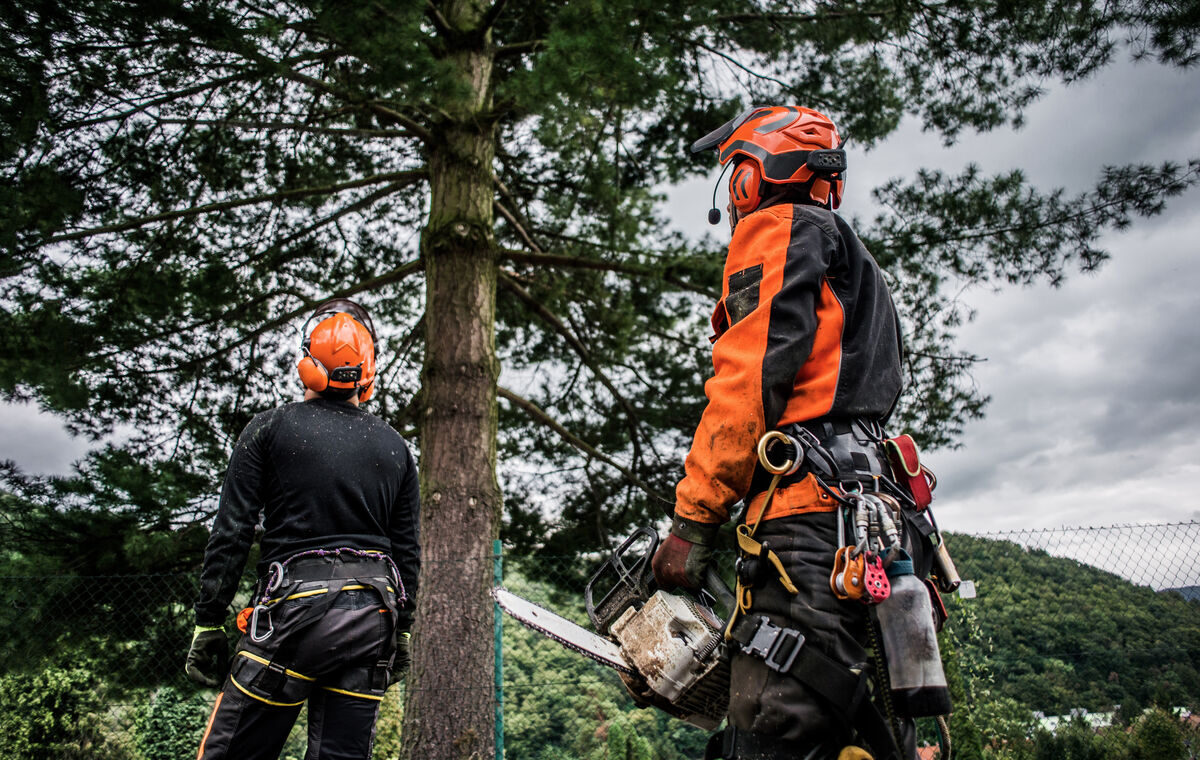
Tree Felling & Removal
Dead, diseased, storm-damaged or simply too big, we take trees down safely in Stellenbosch, in controlled sections when they’re near a house, wall or power line. Cleanup always included.
See tree felling
Stellenbosch tree-felling specialists
Tree felling in Stellenbosch, heritage oaks, wine-farm windbreaks, protected trees & permits.
What we do
From a single removal to a full clearing, we think the work through, turn up with the right gear for the spot, and tidy up before we go.
Dead, diseased, storm-damaged or simply too big, we take trees down safely in Stellenbosch, in controlled sections when they’re near a house, wall or power line. Cleanup always included.
See tree felling
We grind stumps 150-300 mm below ground so you reclaim level, usable space in your Stellenbosch garden, ready for lawn, paving, decking or replanting.
Get a stump quote
Crown thinning, lifting, reduction and deadwooding that keeps trees healthy, safe and in good shape, and well clear of roofs, gutters and power lines.
Book tree trimming
A tree on the roof or across the drive? Our 24/7 crew makes Stellenbosch properties safe fast, then clears the debris and tidies the site.
Call our 24/7 lineLocal tree felling guide
Stellenbosch is called Eikestad, Oak City, for a reason. The old oaks along Dorp Street and the surrounding residential streets are not just landscape features; they’re part of the town’s identity, and many of them are formally recognised as such. They were planted in the eighteenth and nineteenth centuries and have been growing, more or less continuously, ever since. Some of them are extraordinary trees.
They’re also, in some cases, cracking pavements, lifting retaining walls, threatening foundations, and growing into roof overhangs of buildings that predate the tree by a century. The tension between heritage character and practical property management is more concentrated in Stellenbosch than almost anywhere else in the Western Cape.
If you need tree felling in Stellenbosch, whether it’s a suburban oak that’s become a structural liability, a row of pines on a wine farm, or an invasive alien that’s taken over a stream corridor on a smallholding, you need a team that understands both the technical side and the permit landscape. Here’s where we stand on all of that.
Let’s start with what every Stellenbosch property owner needs to hear before any conversation about removing an oak.
Stellenbosch has a significant number of formally protected trees, oaks and others, under national and local authority protection frameworks. The lists include individual specimens and, in some cases, groups of trees on specific streets or properties. Removing a protected tree without the necessary permit is a serious matter, and not something any reputable tree service should do.
What this means practically: if you have an oak in Stellenbosch that you’re thinking about removing, the first step is to check whether it’s protected. This can involve the municipality, relevant provincial authority, or in some cases Heritage Western Cape, depending on the specific tree and its context. The process is manageable, but it takes time, and proceeding without the right permission is not a risk worth taking.
We are upfront about this. If your tree is likely to require a permit, we’ll say so at the quote stage, not after you’ve committed to a price. If the permit is approved and removal can proceed, we’ll carry out the work. If the permit isn’t forthcoming, we can discuss what alternatives exist: structural pruning, root management, or other interventions that might address the practical problem without requiring removal.
For trees that are not protected, we proceed on a normal basis with whatever the job requires.
Stellenbosch’s mature oaks are, as a rule, trees that have been inadequately maintained over long periods. Good arboricultural care, structural pruning, deadwood removal, crown thinning to reduce wind resistance, could extend the life of many trees that are currently presenting as problems.
Crown thinning and reduction are particularly relevant in the winelands context. Oaks close to wine-farm buildings and cellar infrastructure don’t need to come down to be manageable, they need to be pruned in a way that reduces the risk of limb drop and storm damage, while keeping the tree and its shade value intact.
We follow arboricultural best practice throughout. This means no topping, not ever. Topping is destructive, stimulates rapid weak regrowth, and ultimately kills trees faster than leaving them alone. If you’ve received a quote that includes “topping” as an option, that’s a conversation worth having again.
Beyond the town centre and residential streets, Stellenbosch’s farms present a different kind of tree management challenge. Vineyards use windbreak trees, often a mix of species, to protect vines from the south-easter. That wind rolls off the mountains and through the valleys of the Winelands with real force during the October-to-March growing season, and a good windbreak can make a meaningful difference to vineyard performance.
The problem is that windbreak trees have a lifespan. Old pine or eucalyptus windbreaks eventually become hazardous, particularly when root systems start to compete with vine roots for water. Replacing a tired windbreak is a legitimate wine-farm management decision, and it’s work we do.
We also deal with large trees near historic farm buildings, the old oaks around an original Cape Dutch homestead, for instance, where the heritage value of both the tree and the structure needs to be weighed carefully. We work with farm owners and managers to find solutions that protect both. Where permits are needed, we factor that into the timeline from the start.
Stellenbosch gets the south-easter from the same direction as Cape Town, channelled through the valleys of the Winelands. During summer, gusts above 60 km/h are common and the stronger events can cause genuine structural damage, to vines, certainly, but also to trees. A poorly anchored windbreak pine in a strong south-easter is a significant risk to equipment and personnel in adjacent vineyard areas.
Winter brings a different kind of stress: heavy, sustained rain that saturates soils, followed by north-westerly gales. Wet soil and strong westerly winds are the classic recipe for a tree failure that has nothing to do with the tree being unhealthy, even structurally sound trees can fall when the soil conditions remove their anchorage.
We’re available 24/7 for storm-damage emergencies. Call 0860 017 435 any time. Our priority when responding to a storm call is making the site safe first; full removal and cleanup follows.
Blue gum and Port Jackson have established themselves along many of Stellenbosch’s stream corridors, farm boundaries and uncultivated areas. They’re listed invasive species under national legislation, and their removal is not just allowed but in many cases required.
We fell and remove invasive alien trees fully, including stump grinding to prevent regrowth, and handle all green waste responsibly. In stream corridor areas, where the ecology is sensitive, we work carefully to minimise disturbance. The goal is a clean clearance that doesn’t introduce new problems in the process of solving the old ones.
For neighbouring areas in the Winelands and greater Cape region, see our Somerset West and areas we serve pages.
Why Tree Hugger Collective
Get the crew or the gear wrong and tree work turns into damage fast. For Stellenbosch homes we bring both, work safely, and leave your property the way we found it, only tidier.
Experienced, careful crews who arrive on time and do the job properly, not just quickly.
Same-day availability and 24/7 emergency callouts when a tree can’t wait.
Every job ends with debris cleared, green waste recycled and the space left ready to enjoy.
How it works
We come out, look at the tree, the access and any risks, and listen to what you need, free of charge.
A transparent, itemised price with the scope and timeline spelled out. No pressure, no hidden extras.
Our crew arrives on time with the right gear and works to strict safety standards.
We clear all debris, recycle the green waste, and leave your property neat and ready to use.
Reviews
We manage a wine farm outside Stellenbosch and had a row of old blue gums along the northern boundary that was a wildfire concern and was competing with the adjacent block of Cabernet. Tree Hugger came out, assessed the whole row, gave us a realistic quote and timeline, and cleared fifteen trees over four days including stump grinding. Professional from start to finish. We'll use them again for the pines near the cellar later this year.
Good to know
The Stellenbosch Municipality can advise on locally protected trees. For trees that may be on provincial or national registers, Heritage Western Cape or the relevant national department may need to be consulted. It's worth starting with the municipality. We can help you understand who to approach and what the application involves.
Yes. We work regularly on farm properties with access constraints. Where heavy vehicles can't reach the work area, we adjust our approach, hand tools, smaller equipment, and manual load-out where needed. It takes more time but it doesn't prevent the job from being done properly. We factor access conditions into the quote.
For planned work, allow one to two weeks from quote to scheduled date during quieter periods, and slightly longer during the post-winter storm season when demand spikes. Emergency response is 24/7 with no lead time, call immediately.
Yes. Old oak stumps are tenacious, they'll reshoot from the stump if left, and the root system can persist for years. Our stump grinding service takes stumps down to 150-300 mm below ground level. For farm applications where replanting or working the ground is planned, this is worth doing properly.
The material itself doesn't require special disposal permits in most cases, but we handle all green waste responsibly, chipping for mulch where appropriate or removing it entirely. We can advise on the specific requirements for listed invasive species removal if that's relevant to your situation.
Nearby areas we cover
Let us know about the tree and your suburb. One of us will come and assess it for free, then give you a straight written price and a date that suits you.