Tree felling & tree removal · Johannesburg & Gauteng
Tree Felling & Tree Removal in Johannesburg & Gauteng
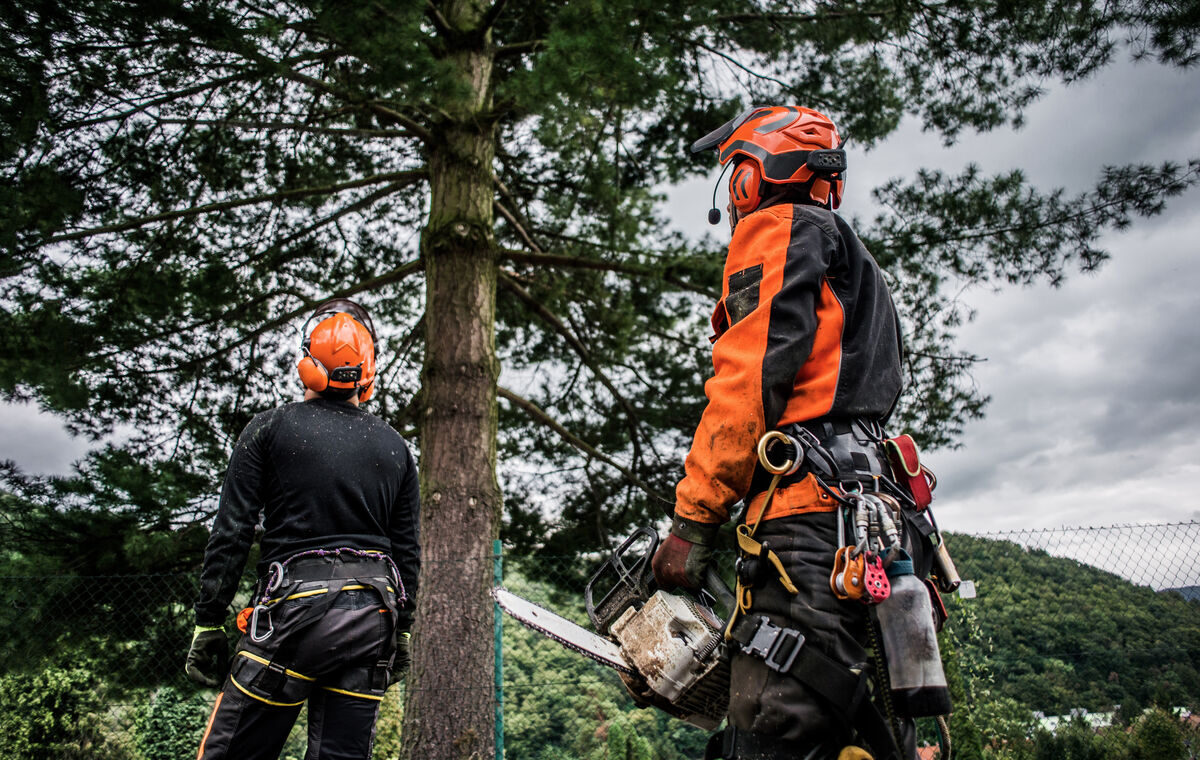
Safe, methodical tree removal from first rope to last sweep. We plan every job around your property, your pool and your power lines, then leave the site cleaner than we found it.
- 4.9★ 87 Google reviews
- 9,500+ trees managed
- Cleanup & eco recycling included
- 24/7 emergency response
Knowing when to act
When does a tree actually need to come down?
Most trees outlast the people who planted them, and most of Johannesburg's suburban stock, jacarandas, planes, oaks, pines, is doing just fine. But some are in trouble, and some have simply ended up in the wrong spot. The honest answer is that you need an experienced eye on the tree, not a guess from a photo.
That said, there are patterns we see again and again across the Highveld:
- Dead or dying trees, bare canopy in summer, bark lifting, no new growth. A dead tree in a Joburg wind is a loaded weapon.
- Disease or rot at the base, fungal brackets, soft wood, hollow sound when you knock. The tree can look fine above ground while the anchor is failing below.
- Storm damage, a major split, a lifted root plate, or a lean that wasn't there before the last thunder cell.
- Too close to structures, roots under the foundation or pool shell, branches over the roof, trunk pushing the boundary wall.
- Invasive species, wattles, bugweed and certain eucalyptus varieties that spread and dry the soil. Out they come.
If you're unsure, don't guess, a free on-site assessment is quicker than the conversation you'll have with your insurer after a fall.

The method
How we actually take a tree down safely
The "yell timber and stand back" version works fine in an open field. In a Johannesburg suburb, with a roof three metres one way, a pool the other, a wall behind you and Eskom cables overhead, we almost never do it that way.
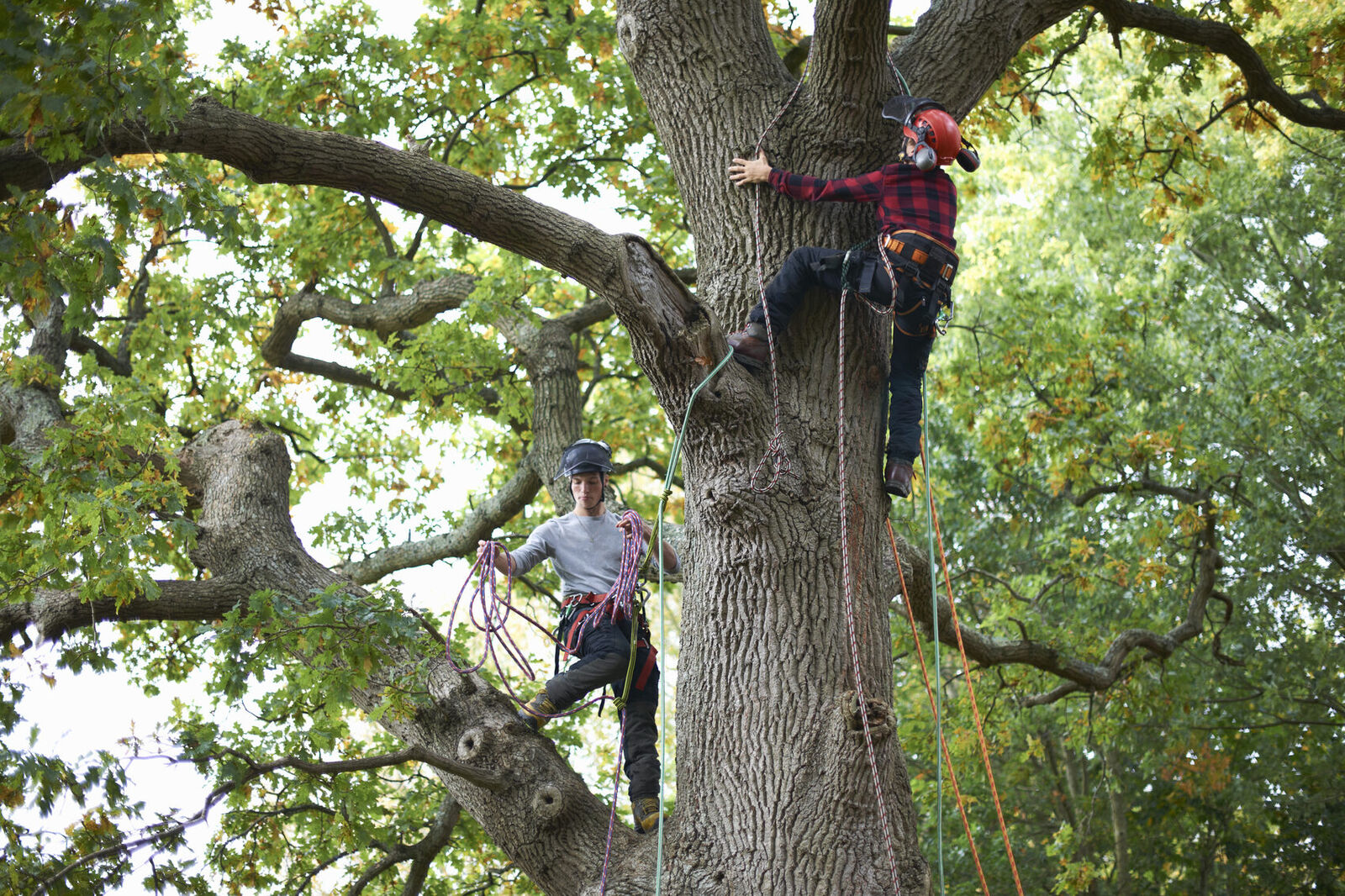
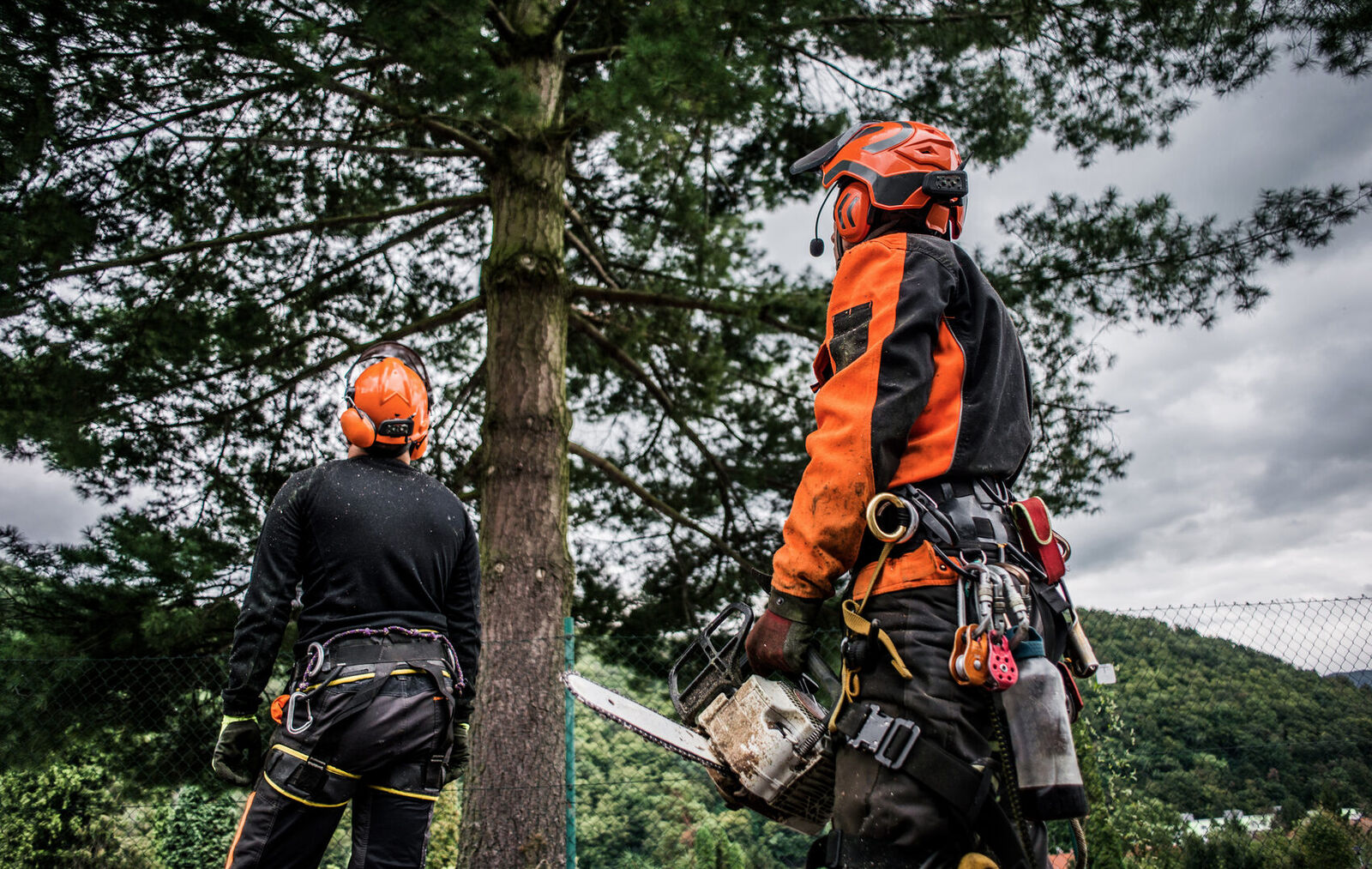
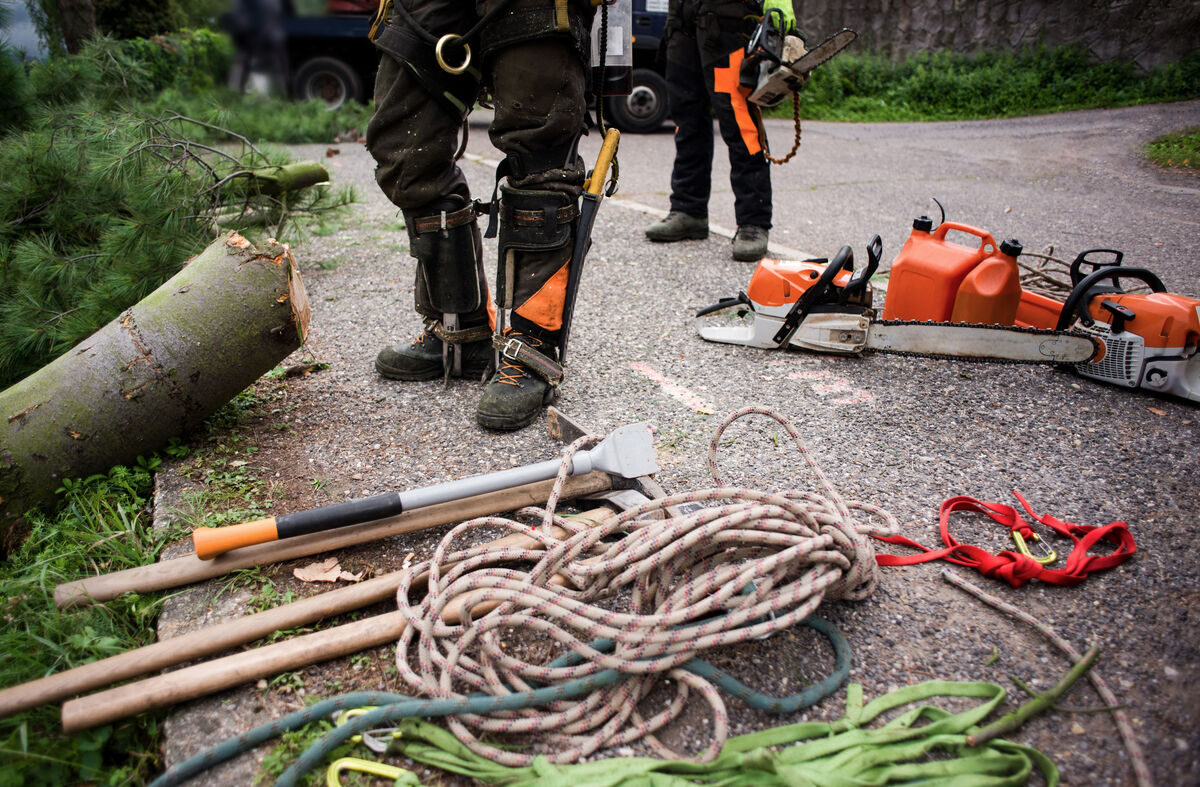
Our standard approach is sectional dismantling: a climber works up into the canopy and removes the tree from the top down, limb by limb, lowering each section on ropes to a precise spot on the ground. Nothing swings free, nothing drops where it shouldn't. The footprint of risk stays small the entire time.
For the really large or truly confined removals, we bring in a crane. The crane lifts whole trunk sections out over the house, over the wall, over whatever's in the way, no damage to your driveway, no crushed garden beds. It's more involved, but when the alternative is a limb through your ceiling it's not really a choice.
Every job starts with the same three questions: where can the timber safely land, what's the safest path for the climber, and how do we keep the public and your property out of the drop zone from start to finish?
- Rope-and-rigging for tight suburban lots
- Crane lifts for large or inaccessible removals
- Spotter system to protect pools, walls and power lines
- 15+ years combined experience in Gauteng conditions
What comes with every job
From first cut to clean site, it's all included
When we quote a removal, the quote covers the whole job. There's no "debris removal is extra" or "green waste disposal is a separate line item", we've always found that kind of thing annoying when we're on the customer side, so we don't do it to ours.
Here's what every tree removal includes:
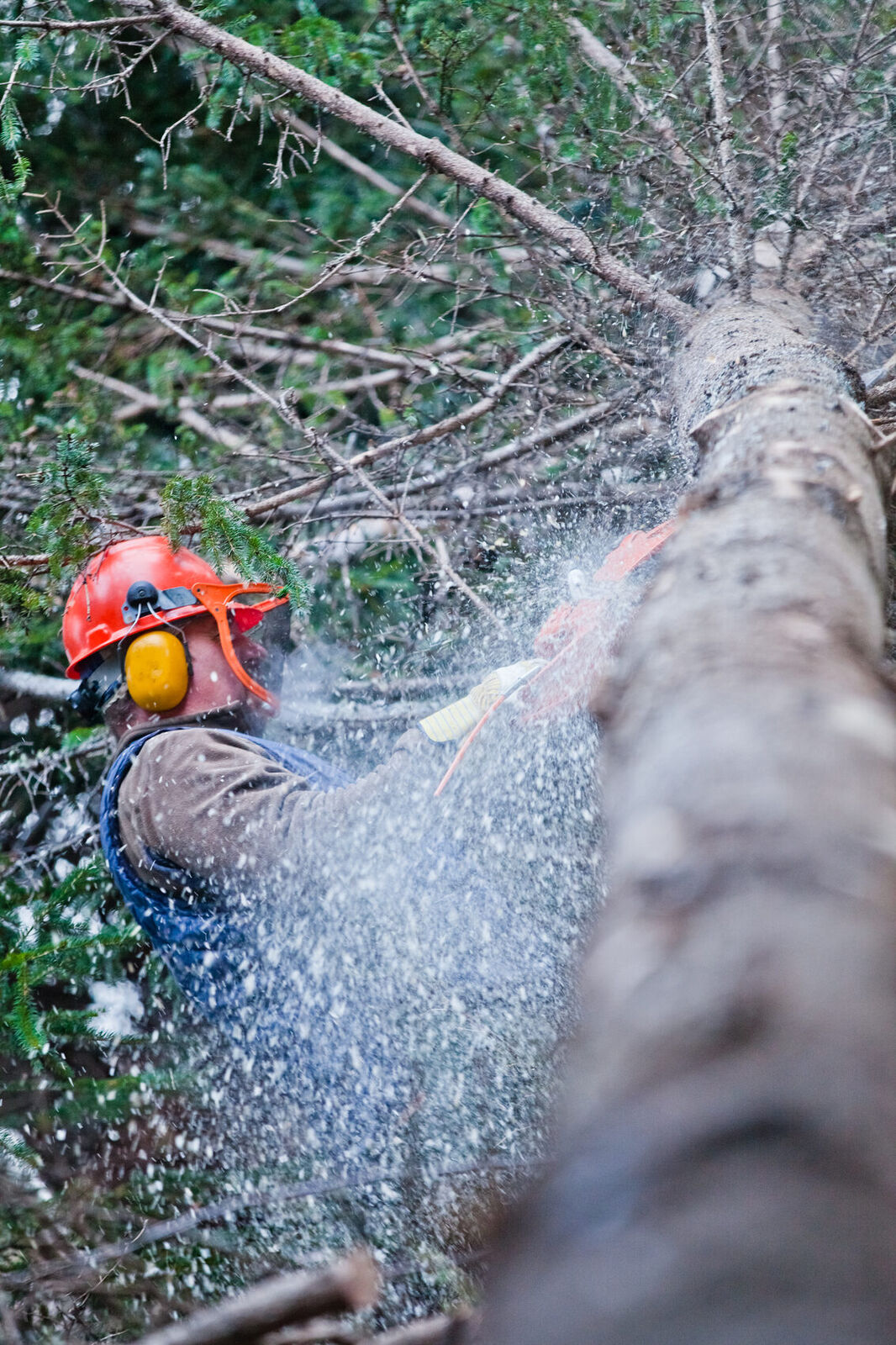
- Full sectional felling and timber cut to manageable rounds
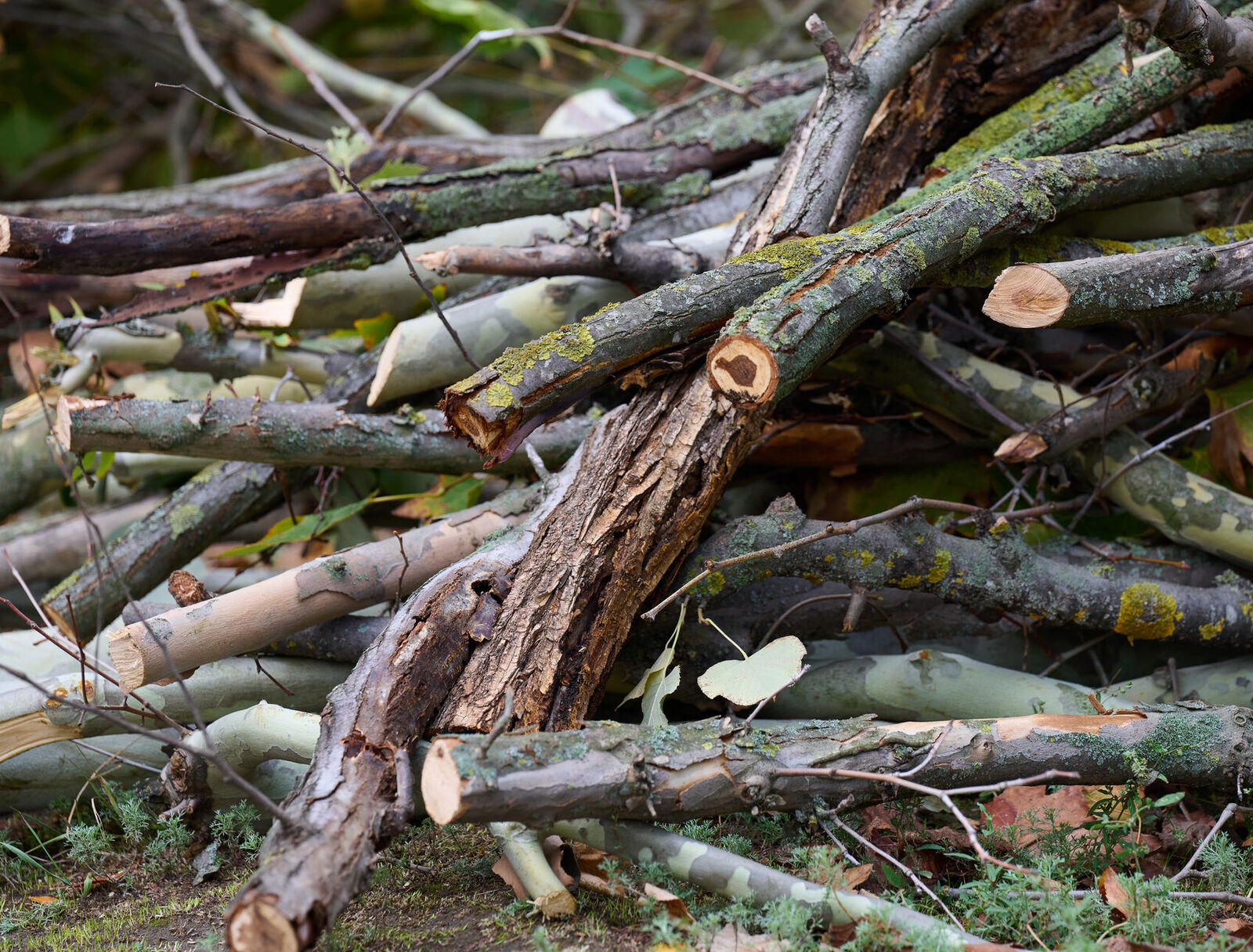
- All branches and debris cleared from the site
- Green waste transported and eco-recycled, chipped for mulch or composted, not landfilled
- Site left clean and ready, no mountain of logs, no churned lawn
- Firewood or mulch left for your own use if you'd like it, just say so
Want the stump gone too? We can grind it to 150-300 mm below ground in the same visit so you reclaim level, usable space. See our stump removal & grinding page for more.
Local knowledge
The trees we commonly remove across the Highveld
Gauteng's urban tree stock is a mix of introduced exotics planted over more than a century and scattered indigenous species. Each species behaves differently when it fails, and different gear and methods apply.
Bluegums (Eucalyptus species) are the ones that keep us busiest. They drop massive limbs without warning even when they look healthy, the trunks are heavy, and some varieties split at the base after drought stress. We have a lot of respect for a large bluegum.
Pines, mostly Pinus patula and Pinus radiata, grow fast, produce dense canopies, and are highly flammable. Old pines that are over-topped, diseased or simply too close to the house are a common job across Randburg, Northcliff and the West Rand.
Plane trees are magnificent street trees, but they get enormous and their surface roots are relentless. When they're lifting paving or too close to a building, removal is a careful, rope-heavy job, these are big, dense crowns.
We also regularly remove silver wattle, bugweed, syringa (Persian lilac), tree of heaven and other invasive exotics that are problematic under national and provincial conservation legislation. On the indigenous side, we handle white stinkwood, wild fig and others, though these often benefit more from careful pruning than removal. See our tree pruning & trimming page for that side of the work.
Before you cut
Felling permits, verge trees and protected species
Most trees in your own garden are yours to manage, but there are two catches that catch people out regularly in Gauteng, and they're worth knowing about before the chainsaw comes out.
The first is verge trees, the trees in the pavement strip between your boundary wall and the road. Even if you've watered them for twenty years, they're usually municipal property. Removing or heavily pruning a street tree without the city's permission can land you in real trouble. If the tree is on the verge and causing a problem, we deal with the municipality as part of the job.
The second is protected species. South Africa's National Forests Act protects a list of indigenous tree species nationally; some provincial and local legislation adds further protections. The list includes species you might not expect to find in a suburban garden. Most of the exotics we're asked to remove, pines, eucalyptus, syringas, planes, aren't covered, but you want this checked rather than assumed, because the fines for an unlawful removal are not trivial.
When we come out to assess your tree, establishing what it is, where it sits, and whether any permit applies is part of what we do. We'd far rather flag it up front than have you find out afterwards.
"We had a massive pine overhanging the boundary and two of the neighbours' roofs, everyone had an opinion but nobody would commit. Tree Hugger Collective came out the same week, explained exactly what they'd do, and had it down and the site clean by lunchtime the next day. Completely stress-free. The neighbours sent a thank-you message."
Honest pricing
What affects the cost of a tree removal?
Nobody can price a tree honestly over the phone, and you should be a little suspicious of anyone who tries without seeing it first. The cost depends on several real variables, all of which we look at before we quote.
- Size and species, a mature bluegum or plane tree is a fundamentally different proposition to a mid-sized pine. Height, trunk diameter and wood density all feed into crew time and equipment needed.
- Proximity to structures, a tree over a roof, pool, wall or Eskom lines takes longer because every section has to be rigged and lowered. Open ground is faster and cheaper.
- Site access, can we get the chipper and truck in? A wide driveway is easy. A narrow walkway through a townhouse complex means everything comes out by hand.
- Condition of the tree, a dead, brittle tree is harder and slower to work than a healthy one, because sections can break without warning and the climbing is less predictable.
- Stump treatment, leaving the stump is the baseline. Grinding adds cost but gives you level, usable ground back. Worth it for most gardens.
- Urgency, a planned removal during the week is straightforward. A 2 am emergency callout after a storm involves different logistics and is priced accordingly.
Good to know
Your questions about tree felling & removal, answered
Straight answers, no marketing fluff.
Do you remove the stump as well, or is that a separate job?
Stump removal is a separate service, we don't include it automatically because not everyone needs or wants it. After felling, the stump is cut to ground level. If you want it fully gone, our stump grinder takes it to 150-300 mm below the surface so you can lawn, pave, deck or replant over it.
Most clients find it worth doing in the same visit, saves a second booking and the access is already set up. See our stump removal & grinding page for more detail, or just mention it when you book.
How quickly can you come out?
For a standard removal or free on-site quote, usually within a day or two. If it's urgent but not an emergency, say a tree that's leaning but not actively falling, we'll work to get to you faster.
For genuine 24/7 emergencies (a tree on your roof, a trunk across your driveway, a limb over live power lines), call 0860 017 435 directly. That line is answered any time.
Do you clean up, or do I need to arrange my own skip?
Cleanup is included as standard, you don't need a skip and we don't leave logs for you to deal with. We cut the timber down to manageable rounds, chip the branches and smaller material, load the lot, and leave the site tidy. Green waste goes to composting or wood recycling, not landfill.
If you want the firewood stacked rather than taken away, or the chip mulch left for the garden, just say so when we quote, no problem at all.
Is my tree protected? Do I need a permit?
Some trees are, and some aren't, and the rules differ depending on the species, where the tree stands, and your municipality. South Africa's National Forests Act protects a list of indigenous tree species that require a permit before felling or even heavy pruning, regardless of whether the tree is on private land. Some municipalities add local by-laws on top of that, especially for street trees on the verge.
Most of the exotic species we're typically asked to remove, pines, bluegums, planes, syringas, aren't listed, but you want it checked before you assume. We flag any permit or approval issue as part of the on-site assessment, so it doesn't become a surprise later.
Should I remove the tree or can pruning fix the problem?
Often pruning is the right answer, and we'll tell you honestly when that's the case. There's no point removing a structurally sound tree that good crown work would make safe for another 20 years, and we're not in the habit of selling removals people don't need.
Removal is the right call when a tree is dead, structurally failing at the base, diseased beyond the point of recovery, or simply in a position where no amount of pruning will keep it from being a problem. Our tree pruning & trimming page covers what good crown work can and can't solve.
Can you work in a cluster home or townhouse complex?
Yes, a significant portion of our Gauteng work is in exactly those environments. Tight access, neighbouring units, parking bays and communal gardens are all familiar territory. Sectional dismantling and roping techniques are specifically designed for confined spaces.
We're used to coordinating with body corporates, managing agents and trustees, arranging neighbour notification, and working within whatever access windows the complex requires. If you're a managing agent or estate manager dealing with a tree, email us directly.
What trees do you typically remove in Gauteng?
Across Johannesburg and the wider Gauteng area we work most frequently with eucalyptus (bluegums), pine, plane trees, oaks, wattles, syringa (Persian lilac), bugweed and tree of heaven. We also handle jacarandas, which are beloved but can become structural problems when they're very old or very close to buildings.
Indigenous species come up too, wild fig, white stinkwood and others, though for those we often recommend skilled pruning before removal. We work across all major Gauteng areas from Johannesburg through to Pretoria, Midrand and the East and West Rand.
Free on-site quotes · No obligation
Ready to sort that tree out?
Tell us what you've got and where you are. We'll come out, have a look, and give you a clear written quote, no pressure, no upselling, no vague "from" figures. Mon-Sat 7 am-6 pm, and 24/7 for genuine emergencies across Johannesburg & Gauteng.
Mon-Sat 7 am-6 pm · 24/7 emergency line · hello@treehuggercollective.co.za