01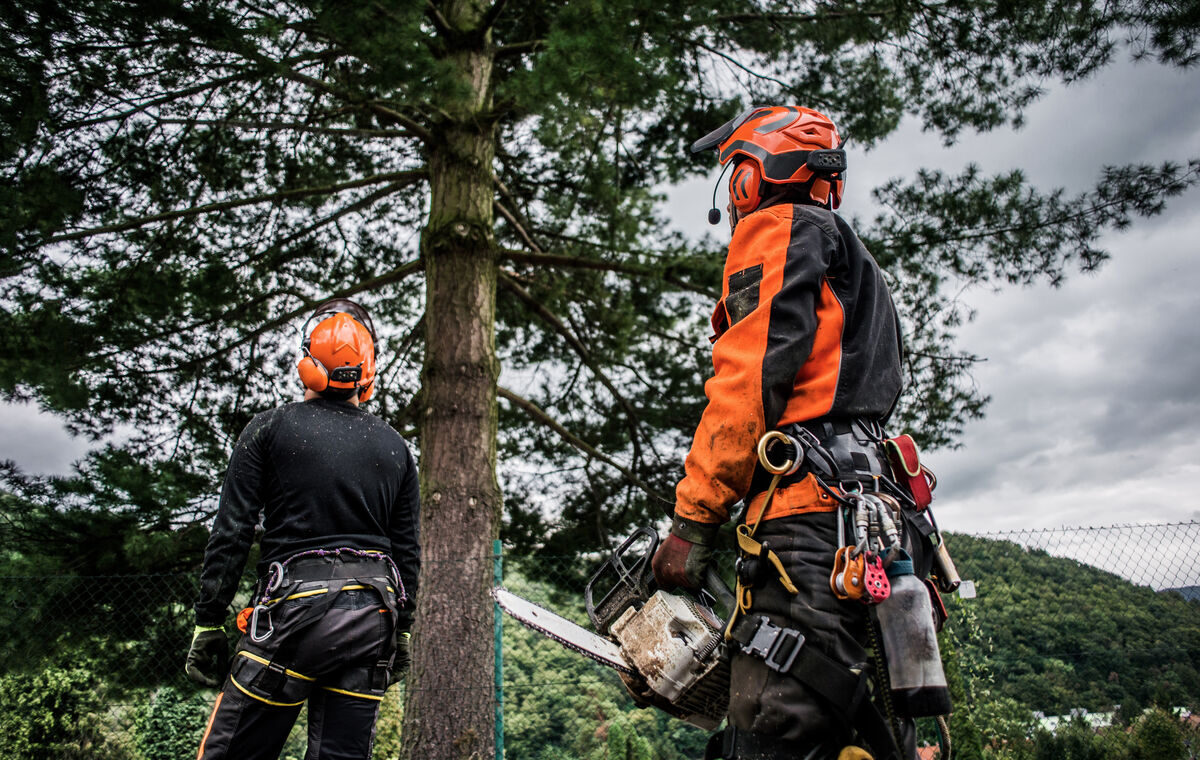
Tree Felling & Removal
Dead, diseased, storm-damaged or simply too big, we take trees down safely in Midrand, in controlled sections when they’re near a house, wall or power line. Cleanup always included.
See tree felling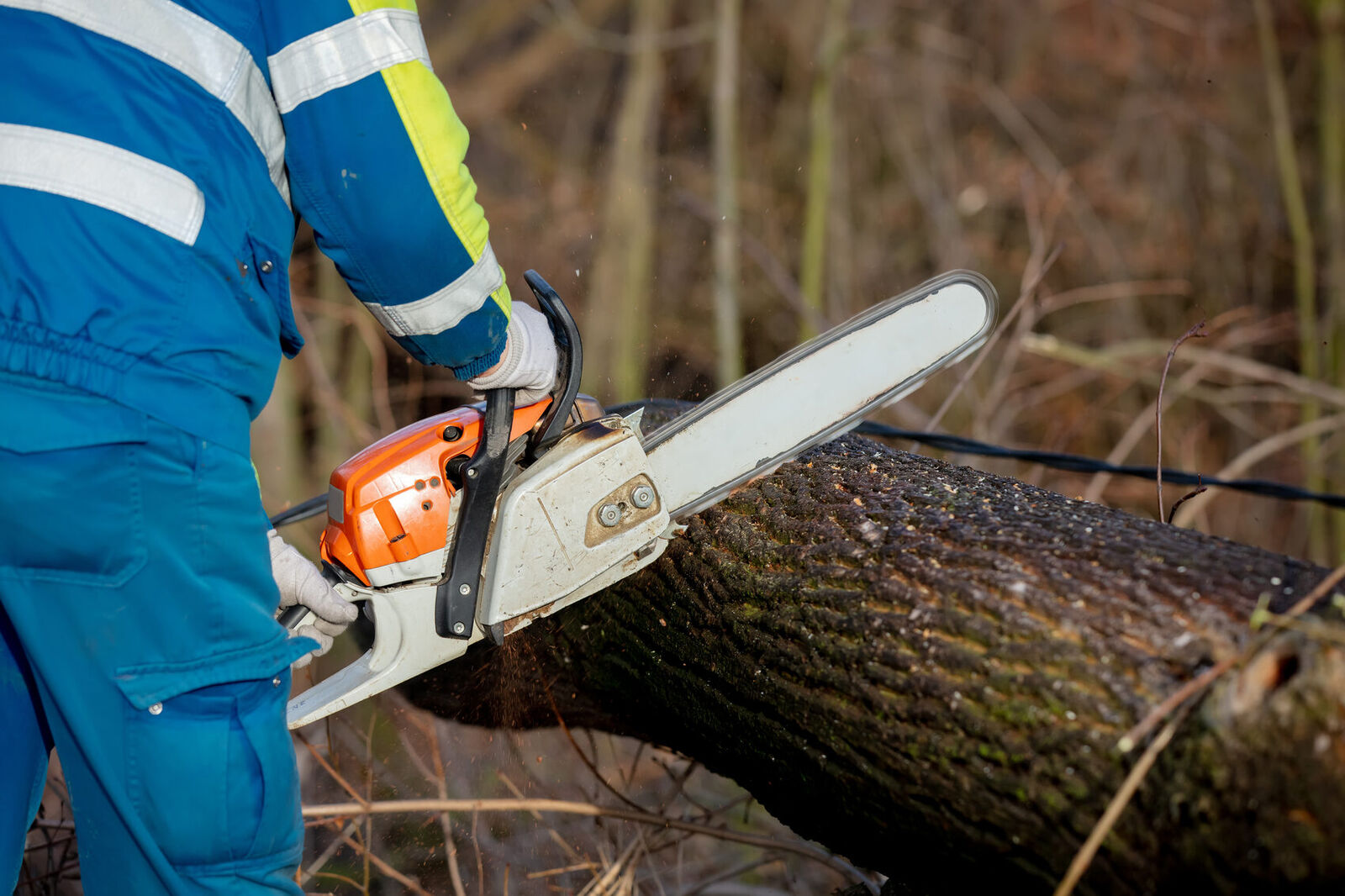
Midrand tree-felling specialists
Tree felling in Midrand, removals, stump grinding, formative pruning & storm call-outs for Waterfall & Carlswald.
What we do
Big tree or small, the approach doesn’t change. We plan it, bring what the job actually needs, and hand the space back clean.
Dead, diseased, storm-damaged or simply too big, we take trees down safely in Midrand, in controlled sections when they’re near a house, wall or power line. Cleanup always included.
See tree felling
We grind stumps 150-300 mm below ground so you reclaim level, usable space in your Midrand garden, ready for lawn, paving, decking or replanting.
Get a stump quote
Crown thinning, lifting, reduction and deadwooding that keeps trees healthy, safe and in good shape, and well clear of roofs, gutters and power lines.
Book tree trimming
A tree on the roof or across the drive? Our 24/7 crew makes Midrand properties safe fast, then clears the debris and tidies the site.
Call our 24/7 lineLocal tree felling guide
There’s a version of Johannesburg’s tree story that’s about old suburbs and ancient bluegums and jacarandas planted by people who died before their grandchildren were born. Midrand isn’t that story. Midrand’s tree story is happening right now, and it looks different.
Drive through Waterfall, through Carlswald, along the edge of Kyalami, and what you see is development at pace: new estates laid out where agricultural land was five years ago, business parks going up along the N1 corridor, young gardens in that transitional phase where the landscaping is still settling in. The trees in these spaces aren’t ancient, some of them were planted by developers trying to make an estate look established before the first show house opened. Some of them are fast-growing species that were chosen precisely because they’d give the impression of a mature garden quickly. Some of them were the wrong choice for that garden, that soil, that proximity to a boundary wall, and nobody’s noticed yet.
Tree Hugger Collective does tree felling in Midrand because Midrand needs it, just for different reasons than old Joburg does. Here’s the picture.
The conventional tree-service customer has a problem that’s been building for twenty years. They’ve got an enormous old specimen that’s finally crossed from “asset” to “liability,” and they want it out. That customer exists in Midrand too, there are pockets of older development, established properties along older routes, mature trees that need the same care as anywhere else.
But Midrand has a second customer profile we see constantly: the person who moved into a new estate or a recently developed property two or three years ago, got an established-looking garden as part of the package, and is now starting to notice that a few of those trees are doing things they shouldn’t be. A root lifting the edge of the newly laid driveway. A fast-growing species planted by the developer that’s now brushing the boundary wall on both sides. A screen of exotic trees put in for privacy that turns out to be an invasive alien nobody mentioned. A row of saplings planted two metres from the house that were charming at 1.5 metres and are now at five metres and climbing.
The young-garden problem is that the timelines are compressed. In an older suburb, a tree takes forty years to become somebody’s problem. In a garden where someone planted Eucalyptus grandis along the fence for screening, it can take four. Fast-growing species are fast-growing species the whole time, not just in the first years.
The good news about young trees is that the solutions are often simpler, and cheaper, than the equivalent work on a massive mature specimen. A tree that’s two years old and in the wrong place is not the same job as the same species at twenty years old.
We work with body corporates, estate managers, property developers and individual homeowners right across the Midrand corridor, from the Kyalami boundary down toward the Halfway House and Vorna Valley areas. The nature of estate development means that a lot of tree decisions were made centrally, by a landscaping contractor hired to make the estate look good for launch, without necessarily thinking through the ten-year picture.
That’s not a criticism, it’s just how development timelines work. The result is that Midrand estates sometimes need a wholesale audit of what was planted and what it will look like in five years. Invasive species planted as ornamentals. Fast-growing trees too close to underground services. Fever trees (Vachellia xanthophloea), which are genuinely beautiful indigenous specimens, planted in the wrong soil conditions and now struggling. Row plantings of species that were chosen for the nursery rather than for this specific Highveld microclimate.
We can work through this with an estate’s management team methodically: assess the stock, identify which trees need to come out before they become insurance claims, which need formative pruning to develop good structure, which invasives need to go before they self-seed beyond the property, and what would make a sensible replanting programme with appropriate species. This isn’t the most dramatic tree work, but it’s the most cost-effective, and Midrand’s estates are in exactly the window where this kind of intervention is still ahead of the problem rather than behind it.
For commercial premises along the Midrand N1 strip and the business parks behind it, the same logic applies at a different scale. Car parks, service roads, landscaped perimeters, all of these need trees that behave predictably over time, and the ones that don’t need to go before they damage vehicles, block access, or fail on the tenants underneath.
Here’s the part nobody puts in the estate marketing brochure: the trees a developer plants are not always going to grow into what the rendering showed. Some will need intervention early. The ones that don’t get it develop problems, weak branch unions, unbalanced crowns, poor structure, that cost ten times more to fix later than they would have cost to manage now.
Formative pruning is the work done on a young tree to help it develop good structure from the beginning. Remove the competing leaders before there are two trunks of equal size fighting over dominance. Take out branches with poor attachment angles before they get heavy. Balance the crown so one side isn’t dramatically heavier than the other. None of this is dramatic or expensive on a young tree. On a fifteen-year-old tree that wasn’t pruned in its early years, it can mean taking out a major limb that’s structurally compromised, a bigger, riskier and costlier job.
Invasive species are a real issue in Midrand gardens. Many of the plants that look like reasonable ornamental choices in a garden centre are listed invasive species in South Africa: various wattles, certain palms, many of the fast-growing screen plants. Being invasive doesn’t make them immune from growing too large, too close, or in the wrong direction, it just means they have no natural brakes on their growth in this environment. We don’t have political opinions about what you have in your garden, but if something is listed and it’s causing a structural problem, we’ll remove it and we’ll tell you what it is.
Fast growers too close to structures is probably the single most common call we get from Midrand properties. Some of the popular choices for quick garden establishment, certain poplars, some wattles, several of the ornamental figs, have root systems that are entirely out of proportion to what you can see above ground. They find the nearest reliable moisture source, which is often a pipe or a drain or the slight damp that accumulates against a foundation. By the time there’s a surface problem, there’s already an underground one.
All of the above, formative pruning, managing invasives, giving trees the right conditions, doesn’t mean every tree in Midrand can be saved or should be kept. Sometimes the honest answer is that a tree is in the wrong place and needs to come out.
We fell and remove trees of all sizes in Midrand, using sectional dismantling for anything near a structure and open felling on clear ground. For trees in the tight garden footprints typical of new Midrand estates, sectional work is the standard. We rig and lower each piece so it lands where we want it, protect the surfaces below, and clear the site completely before we leave. Stump grinding is included if you want it, and for most species planted in new estates, you do, because you almost certainly want to replant or pave that space.
Removal is also the right call for trees that are dead or dying, structurally unsound, diseased beyond management, or, increasingly relevant in Gauteng, infested with the Polyphagous Shot Hole Borer (PSHB). This invasive beetle has been spreading steadily through Johannesburg and Pretoria’s tree stock, and Midrand is not exempt. If you’ve noticed round entry holes, staining, or fine powder on a tree’s bark, it’s worth having it assessed. A heavily compromised tree needs to come out before it becomes a fall hazard, and the wood needs to be handled properly to avoid spreading the beetle further.
The N1 corridor that Midrand sits on is a known storm track. The Highveld’s summer weather often runs along the ridgeline between Johannesburg and Pretoria, and Midrand sits in a position where it catches fronts coming from both directions, as well as the local convective storms that build over the warmer months without much warning.
New gardens are particularly vulnerable in a storm because the trees haven’t had time to establish deep root systems. A five-year-old tree with shallow roots in soft loam soil is in a very different position to a forty-year-old oak in compacted, deep soil when a downburst wind hits. We see this in the aftermath of Midrand storms: relatively modest wind speeds tipping entire young trees that weren’t adequately anchored, root balls that pulled clear of the ground because the tree just hadn’t been down long enough.
The pre-season prep for a young Midrand garden is straightforward: reduce the crown on any young tree with a lot of sail area before it has deep roots to resist the load, stake any recent plantings that are still vulnerable, and clear any dead or broken material that’s waiting to come down. If you’ve had a recent planting blow over in a storm, the question is whether the root system survived intact, some blown-over young trees can be righted and staked if you get to them quickly.
For genuine storm damage, a tree on a roof, a trunk blocking the street, anything hanging on power lines, our 24/7 emergency line handles Midrand the same as the rest of Gauteng. Call first, describe what you’ve got.
Why Tree Hugger Collective
Cutting corners is what causes accidents. Every Midrand job gets the right hands, the right kit, a careful approach to safety, and the kind of respect we’d want for our own garden.
Experienced, careful crews who arrive on time and do the job properly, not just quickly.
Same-day availability and 24/7 emergency callouts when a tree can’t wait.
Every job ends with debris cleared, green waste recycled and the space left ready to enjoy.
How it works
We come out, look at the tree, the access and any risks, and listen to what you need, free of charge.
A transparent, itemised price with the scope and timeline spelled out. No pressure, no hidden extras.
Our crew arrives on time with the right gear and works to strict safety standards.
We clear all debris, recycle the green waste, and leave your property neat and ready to use.
Reviews
When we moved in, the developer had planted three large trees right along our northern boundary. They looked great in the show house brochure. By year two they were brushing the wall on both sides and the roots had already lifted a section of the paving. Tree Hugger Collective came out, took all three trees out cleanly, ground the stumps, and suggested what we could plant instead that would give us the privacy without the root problem. The replacement planting advice was worth as much as the removal. Brilliant job.
Good to know
Yes, we do estate-wide assessments for body corporates and managing agents. The output is a clear report on which trees need attention, what kind of work each one needs, and in what order of priority. This is exactly the kind of thing that's far cheaper to address now, in a new estate, than in ten years when the problems have compounded. Contact us at hello@treehuggercollective.co.za or through the contact us page to discuss the scope.
There are a few good South African resources, and the plants most often showing up in Midrand gardens as problem species are fairly consistent, various Acacia wattles, certain palm species, some ornamental aloes and grasses. When we do an assessment, we'll note anything that's both a structural concern and a listed invasive. We're not the invasive-species police, but it's useful information to have.
It's very species-dependent. Certain trees, many of the wattles, some of the fast-growers common in new estate landscapes, are aggressive resprouters from a cut stump. If the stump wasn't ground out or chemically treated at the time of removal, regrowth is likely. A retrospective stump-grinding visit will sort it out. Call us and we'll book one.
Yes. We work on occupied and unoccupied sites and are used to coordinating with construction teams. Clearing problem trees during construction, rather than working around them in a completed, furnished garden, is actually significantly cheaper and cleaner from a practical standpoint.
Send through the basics and we’ll do the rest: a free site visit, a clear written quote, and a booking that fits around your week.